

The Fed kept rates on hold Wednesday, as expected.
“As expected” needs a giant asterisk. The related footnote would tell you that STIRs came into the decision still pricing meaningful odds (roughly one in three) of a hike.
As discussed here on Tuesday evening, the odds of Kevin Warsh hiking without The White House’s blessing were zero in my view. I assume (hope) most traders agreed.
If Warsh moved at the July FOMC, it would’ve been because The White House afforded him the latitude to deliver the hike many market participants — to say nothing of several policymakers — believe’s warranted under the circumstances.
Any such leeway would’ve had very little to do with inflation and a lot to do with lacquering a veneer of credibility dulled by Donald Trump’s domineering approach to the Fed. Scott Bessent might’ve also made the case to Trump that hiking now could prevent the market from cornering Warsh into a larger move in September just a few weeks before the mid-terms.
Anyway, it’s a moot point. Rates were left unchanged. There was some disagreement. Beth Hammack, Neel Kashkari and Lorie Logan (none of whom are on the board, obviously) all wanted a hike. Besides noting the dissents, the statement was unchanged from June.
Warsh will keep his options open, but given his (in my view feigned) pretensions to protecting price stability at virtually any cost, he had little choice but to impart a hawkish spin on Wednesday’s hold.
In the hours ahead of the decision, oil prices surged anew after the US and Saudi Arabia jointly struck Iran-linked militia in Iraq, killing at least two dozen including what one of the groups said were “several” Quds Force advisors.
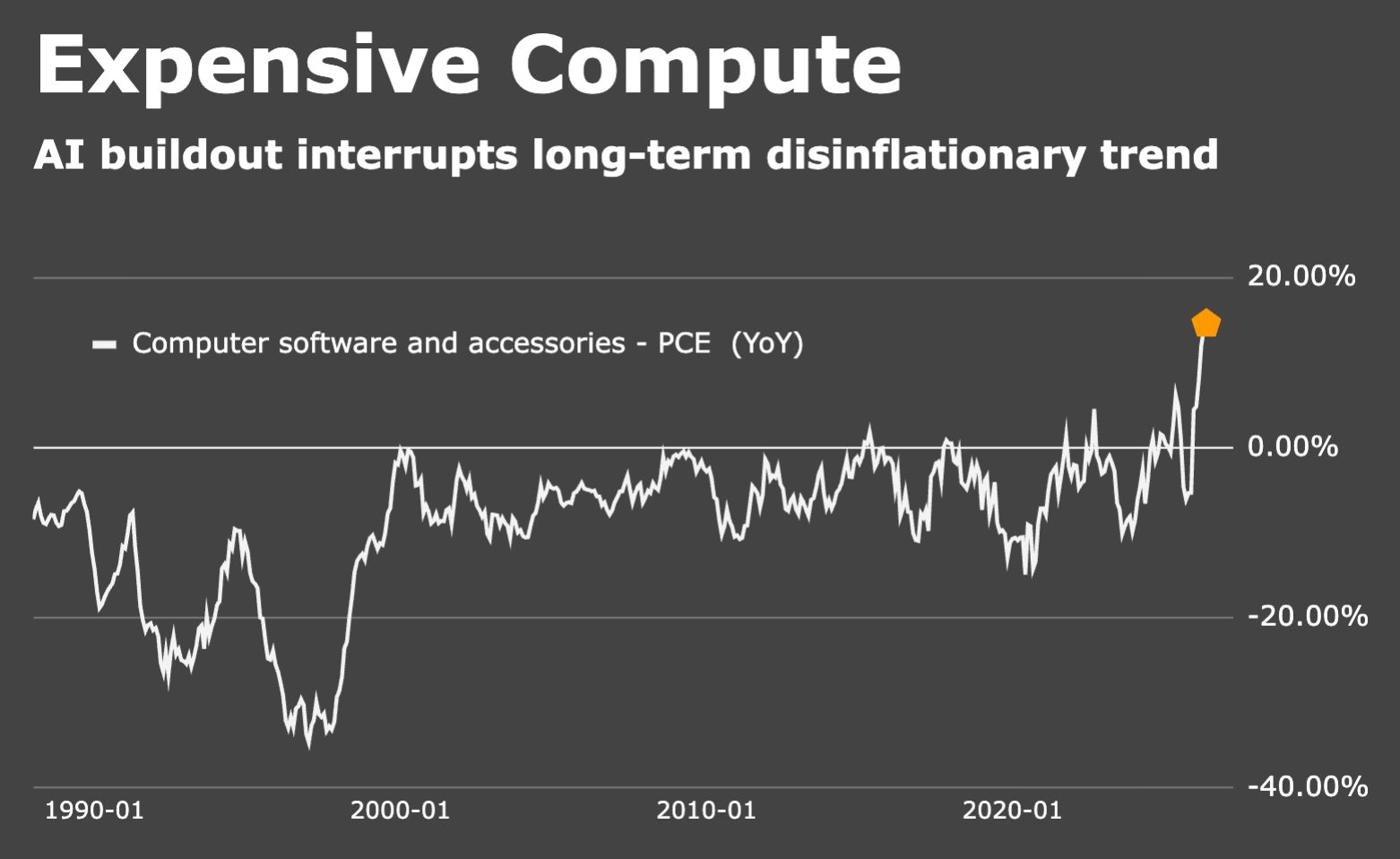
In addition to the collapse of the US-Iran ceasefire, Warsh is also contending with new tariffs, soaring prices for computer components and the distinct possibility that the AI capex boom has pushed up r-star. Market proxies for the neutral rate are the highest in decades.
Although inflation readouts for June were relatively benign, the relief came courtesy of a pullback in crude prices which have since climbed sharply in the wake of renewed fighting in the Gulf.
“While the timelines of task force recommendations are such that waiting for the results won’t prevent the Committee from hiking during the next few meetings, the potential for changes in inflation measurement and the perceived impact of productivity contribute to the case for patience,” BMO’s Ian Lyngen remarked, referring to Warsh’s five investigative committees.
“The lack of forward guidance and the crosscurrents within the data resulted in [Wednesday’s] Fed outcome being a greater unknown than investors had become accustomed to,” Lyngen went on, in the same note. “In the event this is the new norm, one should expect Fed days to see higher realized volatility going forward.”



No surprise.
All regional presidents dissent. No board dissent.
October in play….
Warsh answered a question about guidance by saying “He added he no longer wants to “spoon feed” markets about what the Fed might decide at its policy meetings.”
I agree with him (Which I’m sure will be a source of deep comfort for him.)
Yeah derek and Steve Liesman immediately cornered him. So did Axios. He wants markets to speak, they did (twos 75bps wide to EFFR on July 23) and what did he do? He covered his ears. See my presser coverage: https://heisenbergreport.com/2026/07/29/warsh-asked-markets-to-speak-he-didnt-like-what-he-heard/
Warsh Hawkish>Cave. Buckle up.
Seems to me that Warsh is trapped. He cannot raise rates, because his Master won’t let him. He can change the inflation target, but markets will see through that. He cannot try to influence rates through guidance, because he’s committed to give none. So he is stuck standing at the lectern like a stuffed frog with a tape player looping lines that probably sounded steely and resolute when he first spoke them to his mirror but increasingly sound like a confession of irrelevance from a man soon to learn the difference between the peanut gallery and the hot seat.
Precisely
nicely put
Folks…. I’m curious on the mechanics of these votes if anyone is willing to advise as I’m trying to understand the relative importance of the bargain that Warsh struck with Trimp….If everyone votes for a rate raise, does it even matter what the chair says? I appreciate it’s different from the BOE, but does the fed chair hold any special power to determine the outcome other than being first among equals?
From AI and if Mr Softie takes a hit tomorrow, then I’ll buy more….
Federal Reserve voting power on interest rates rests with the Federal Open Market Committee (FOMC), which includes the 7 Board of Governors, the President of the New York Fed, and 4 rotating regional bank presidents.The FOMC Voting StructureTotal members: 12 voting members set the benchmark interest rate.
Board of Governors: 7 permanent members appointed by the president and confirmed by the Senate.New York Fed President: 1 permanent voting member who serves as the vice-chair of the committee.
Regional Bank Presidents: 4 rotating voters chosen from the remaining 11 regional Federal Reserve banks, serving one-year terms.
Recent Voting DynamicsCurrent policy rate: Held steady in a target range of 3.5% to 3.75%.Recent split decision: Voted 9-3 to keep rates unchanged, reflecting rare dissension as three regional bank presidents preferred a 0.25 percentage point hike to combat inflation.Dissenting officials: Dallas Fed President Lorie Logan, Minneapolis Fed President Neel Kashkari, and Cleveland Fed President Beth Hammack.
The Federal Reserve Chairman cannot legally or officially override an FOMC vote on interest rates. I think Trump can tell Pulte to sic em!
I hope this helps….