Better to under promise and over deliver I suppose.
China on Sunday set what it was fair to call a cautious growth target for 2023.
In his last government work report, the outgoing Li Keqiang said Beijing will aim for GDP growth of around 5% this year, an underwhelming, if realistic, goal as the world’s second-largest economy attempts a comeback following a year spent laboring beneath a draconian pandemic containment regime.
Xi’s Shanghai lockdown brought the economy to a virtual standstill just months ahead of October’s Party congress, where he consolidated power and purged moderates, including Li, who warned repeatedly on the growing economic toll from “COVID zero.”
The curbs were abruptly lifted in December amid a rare outpouring of public disaffection. Data released in January suggested GDP growth came in at 2.9% for Q4, far better than economists expected.

Some observers, myself among them, questioned the veracity of the figures.
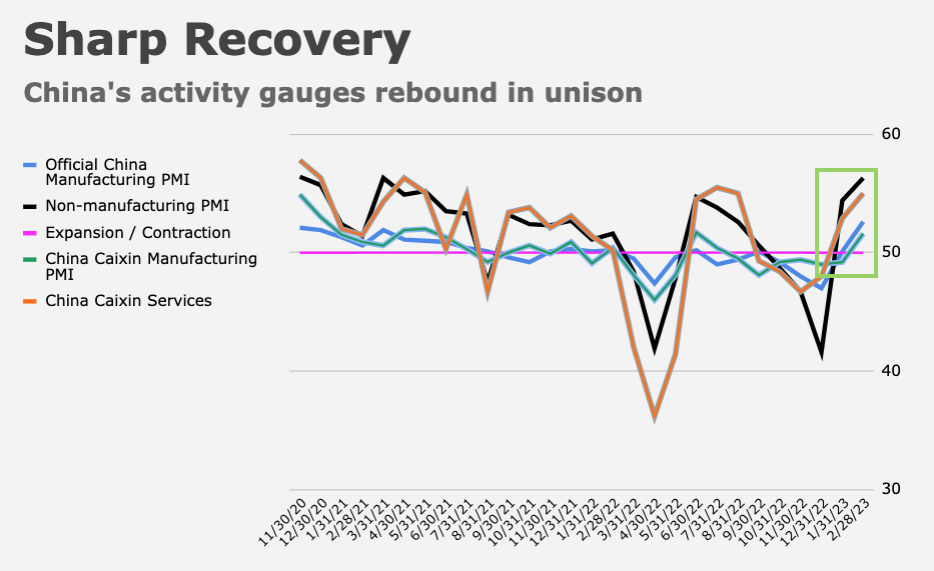
Last week, both sets of PMIs (i.e., the official and Caixin figures) showed manufacturing and services activity rebounded sharply in February.
Some reports indicated the Chinese leadership was surprised at the breadth and rapidity of the recovery, and that led to speculation about a higher growth target. But, it wasn’t to be.

The goal for the budget deficit this year, also unveiled Sunday as the National People’s Congress got underway, is 3% of GDP. China will also increase defense spending.
Last year, China targeted 5.5% GDP growth, a goal the Party effectively abandoned midway through, when it became clear that sticking with the no tolerance approach to the virus meant sacrificing the economy.
As usual, the list of challenges for the Party is long. In addition to resuscitating the property market and convincing foreign capital that Xi can be trusted, Beijing is grappling with elevated local government debt levels and the prospect of a worsening economic war with the US.