The good news is, headline inflation in Europe receded to 8.5% in January.
I should pause to note how surreal this (still) is. Prior to the pandemic and the war, Europe seemed destined to suffer the same fate as Japan, mired in deflation. Two years into the 2020s, Europe should be so lucky.
The flash estimate for January was below expectations, and counted as the coolest print since May. Economists expected 8.9% from the headline reading.

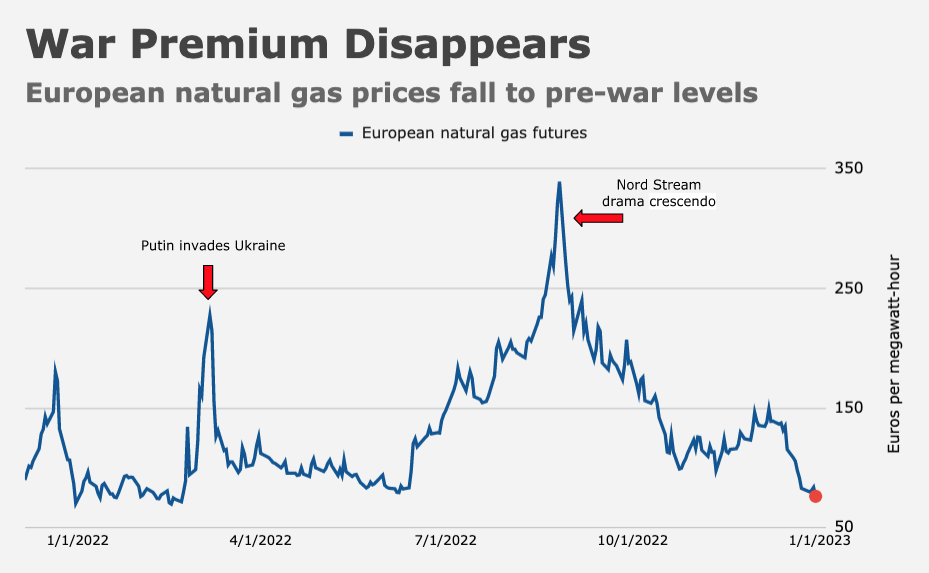
The 12-month rate of energy inflation slid to “just” 17.2%. It was 41.5% in October. European gas prices have erased the entirety of the war premium and the region mercifully avoided the existential crisis many predicted over the winter.
The bad news in Wednesday’s report was that core inflation stuck at a record high 5.2%. Economists expected a downtick.
German inputs were delayed by technical problems, compelling Eurostat to conjure its own estimate for the country (around 8.6% on a harmonized basis, apparently). “Besides that, we have the annual item weights revision influencing the data, already making it a difficult month to interpret,” ING’s Bert Colijn remarked.

The drop on the headline gauge was the third consecutive, and the rate of deceleration is rapid. But, again, these figures could be misleading. They’re difficult to interpret and flattered by energy, where base effects are meaningful.
The data came sandwiched between a better-than-expected read on Q4 GDP and February’s ECB meeting, at which officials will deliver another 50bps rate hike. Evidence that inflation is finding its way into wage-setting is problematic for Christine Lagarde, and very high core inflation will surely offset the deceleration on the headline measure in the minds of hawks.
Food, alcohol and tobacco prices rose 14.1% in January from the same period a year ago. Services inflation was 4.2% this month, although it fell 0.2% on a MoM basis.
Ultimately, policymakers surely won’t be swayed by the figures, particularly given the possibility of revisions when the final numbers are released in three weeks, and the potential for surprises when Germany publishes its official figures next week.
At the same time, the bloc’s better-than-expected economic performance is a double-edged sword: The rapid decline in energy prices, as well as government subsidies designed to cushion the financial blow to households, might be pushing up core inflation. That’s a delicate subject in wartime, but one Lagarde may be compelled to broach this week.