

In the context of what many believe is the largest speculative mania since the dot-com bubble (and perhaps since the railroad boom), the business week ended October 16, 2026, will either be remembered as the start of something or another false alarm.
Big-cap US tech was on track Friday for its worst week in months, led lower by semis which never found their footing after selling off initially on concerns around Chinese competition.
As the figure below shows, the SOX was on the way to its worst week of the year and its second-worst in two.

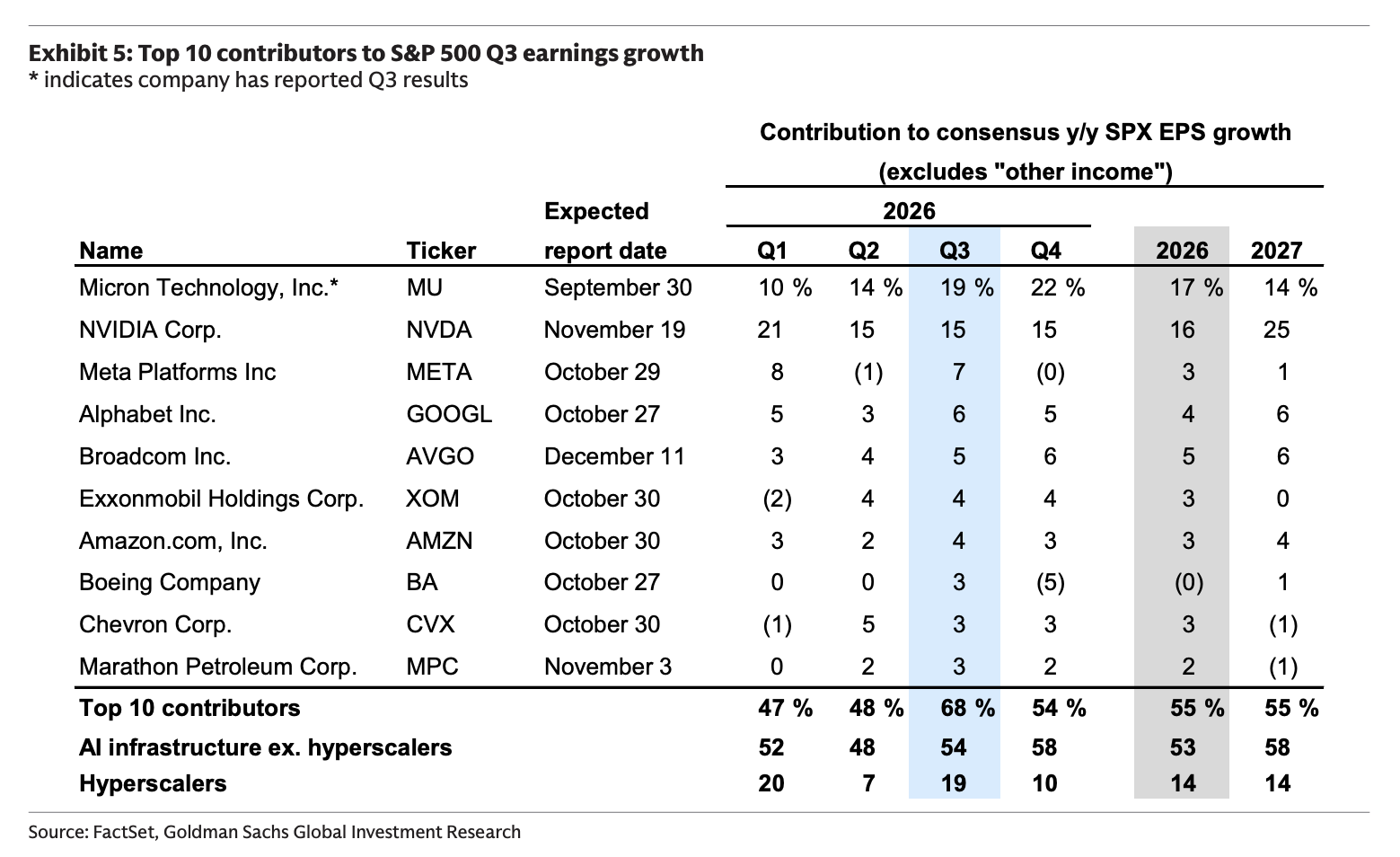
Micron, the linchpin of S&P 500 earnings growth, was bludgeoned to the tune of 13%.
The October installment of BofA’s Global Fund Manager survey, released this week, found professional capital allocators again identifying “long global semis” as the most crowded trade on the planet, where “again” means for the seventh consecutive month.
It’s still a crowded trade even after this week’s shakeout, but my goodness: If it was rough for Micron, it was an outright dumpster fire for the other two names in the HBM oligopoly. SK Hynix plunged an egregious 24% in South Korea. Samsung didn’t fare much better, diving nearly 18%.

The figure above shows the benchmark Kospi, which fell 14.5% for its single worst week since the GFC.
If you’re inclined to suggest a one-week plunge of that magnitude on a quasi-developed market equity benchmark is evidence of regulatory failure, you’re not wrong. South Korean authorities shouldn’t have green-lighted leveraged single-stock ETFs on the country’s national chip champions.
It wasn’t just the chips. The neoclouds were beset too as a decline in CoreWeave’s bonds and an accompanying surge in CDS-implied default odds fanned concerns that the company might need to be backstopped by Jensen Huang, a notion he dismissed as absurd.
Oracle was caught in the crossfire. The shares fell nearly 10% on the week. Oracle isn’t CoreWeave, of course, but investors are nevertheless concerned about the company’s debt-financed bet on data center leasing, which has driven capex through the ceiling and free cash flow into the basement.

The figure above shows you Oracle’s CDS plotted with blue-chip tech spreads. And no, I don’t like the double y-axis either, but I gotta admit: It’s tempting to plot it that way, as BofA’s Michael Hartnett generally does. It really drives home the point.
Speaking of ol’ Mike, he said Friday that the fate of the rally ultimately hangs on semis, and specifically chip prices themselves (i.e., not just the price for chip stocks). “We think macro and markets into 2027 are driven by AI — watch semiconductor prices,” he wrote.
Higher prices for components would be bullish to the extent that’d suggest the AI arms race between the US and China continues, thereby ensuring the continuation of a de facto “US government guarantee for bond/equity prices” — you know, lest falling shares and a rising cost of capital should “impede” America’s capacity to compete.
In a bull case, “investors return to tech in mid-November and enter 2027 reversing shorts in tech bonds,” Hartnett went on. By contrast, “a rollover in semi prices” would signal “further tightening of AI credit, a top in AI capex growth and lower-than-expected nominal GDP growth in 2027.”


To catch or not to catch a falling knife…that is the question.
I expect we’ll see some fireworks the next couple weeks as Iran tries to poke at Trump ahead of the midterms and Ukraine takes the gloves off on Russian refineries.
However, I think we might see a rally after the election. Trump and Iran might decide to play nice and both declare victory at that point since both parties will lose their incentive to escalate as I assume MAD is not the ideal outcome for either side. Then again, we’re not exactly dealing with rational actors on either side.