For all the concern about the hawkish read-across for monetary policy of rising energy costs, Albert Edwards suspects next year’s “big surprise” may “be rate cuts, not hikes.”
Let me just say, right off the bat, that I wouldn’t be “surprised” at all to see rates cut in 2027. Or at least I wouldn’t be surprised to see them cut in the US.
Try as the polite among us might, there’s no escaping the reality that Donald Trump’s surrogates i) threatened to indict Jerome Powell for allegedly lying to Congress about supposedly wasteful spending on renovations at the Eccles building and ii) tried to fire another Fed board governor over unproven mortgage fraud allegations.
Everyone knows Kevin Warsh is under pressure to find a way to cut rates in the US. To deny that is to be willfully naive. If there’s an excuse to lower rates, Warsh will avail himself. My guess (and I’m hardly alone) is that his “task forces” have an unspoken mandate to find such excuses.
But Warsh might get lucky. He might not need to engineer rate-cut rationales. The market and the macro may afford him enough air cover, even in the presence of rolling supply shocks and persistently elevated commodity costs.
The figure on the left, below, from Albert’s latest, shows you how well US manufacturing (which emerged in 2026 from a years-long recession, according to ISM’s activity gauge) tracks forward earnings estimates.

The figure on the right shows the Chinese credit impulse as a leading indicator for US manufacturing activity.
A couple of things. First, ISM manufacturing also maps well onto the YoY change in the SOX, and upside earnings revisions this year were largely a function of windfall profits for chip names. Many believe revisions breadth for semis has peaked with the rate of hyper-scaler capex growth.
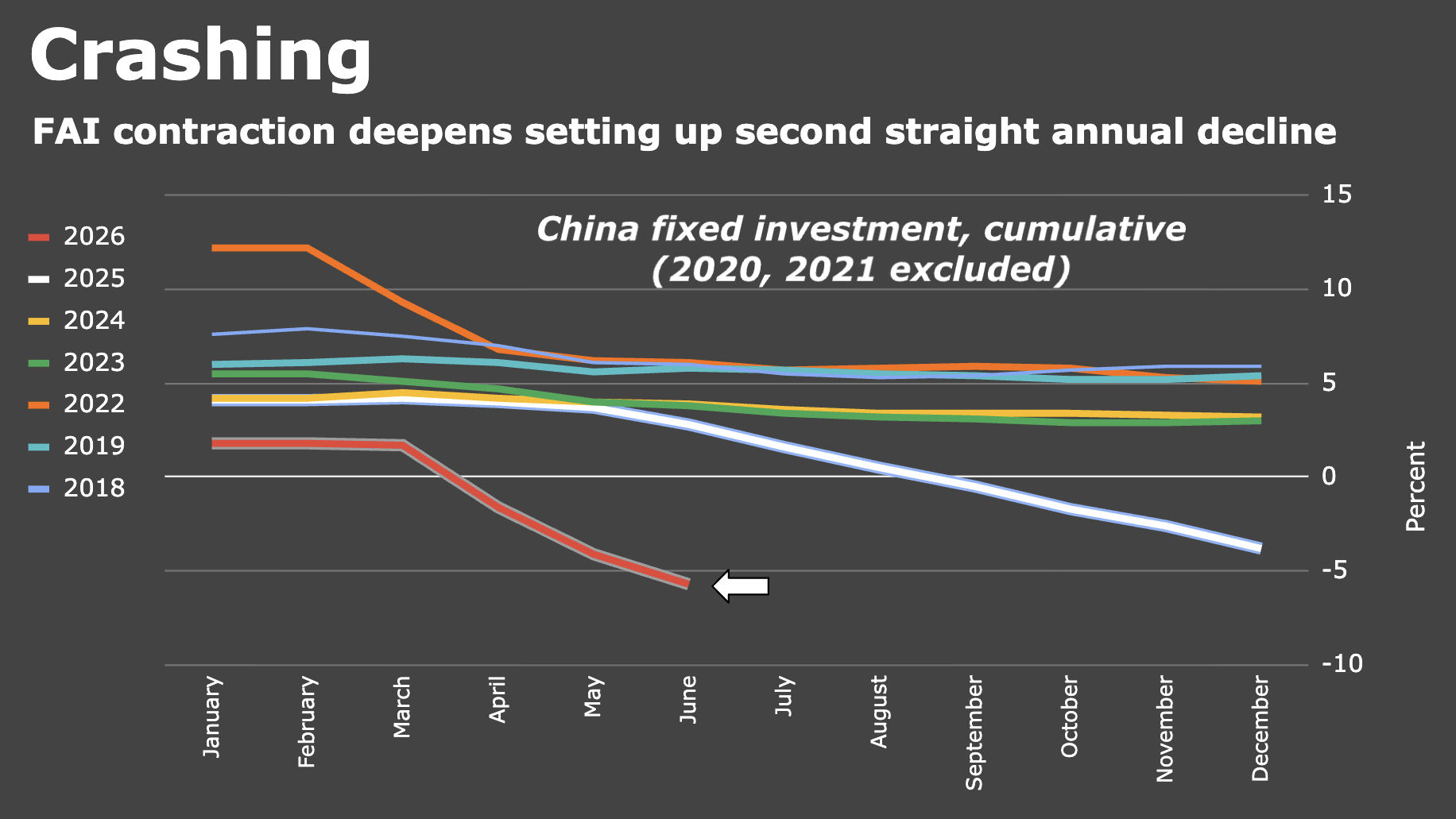
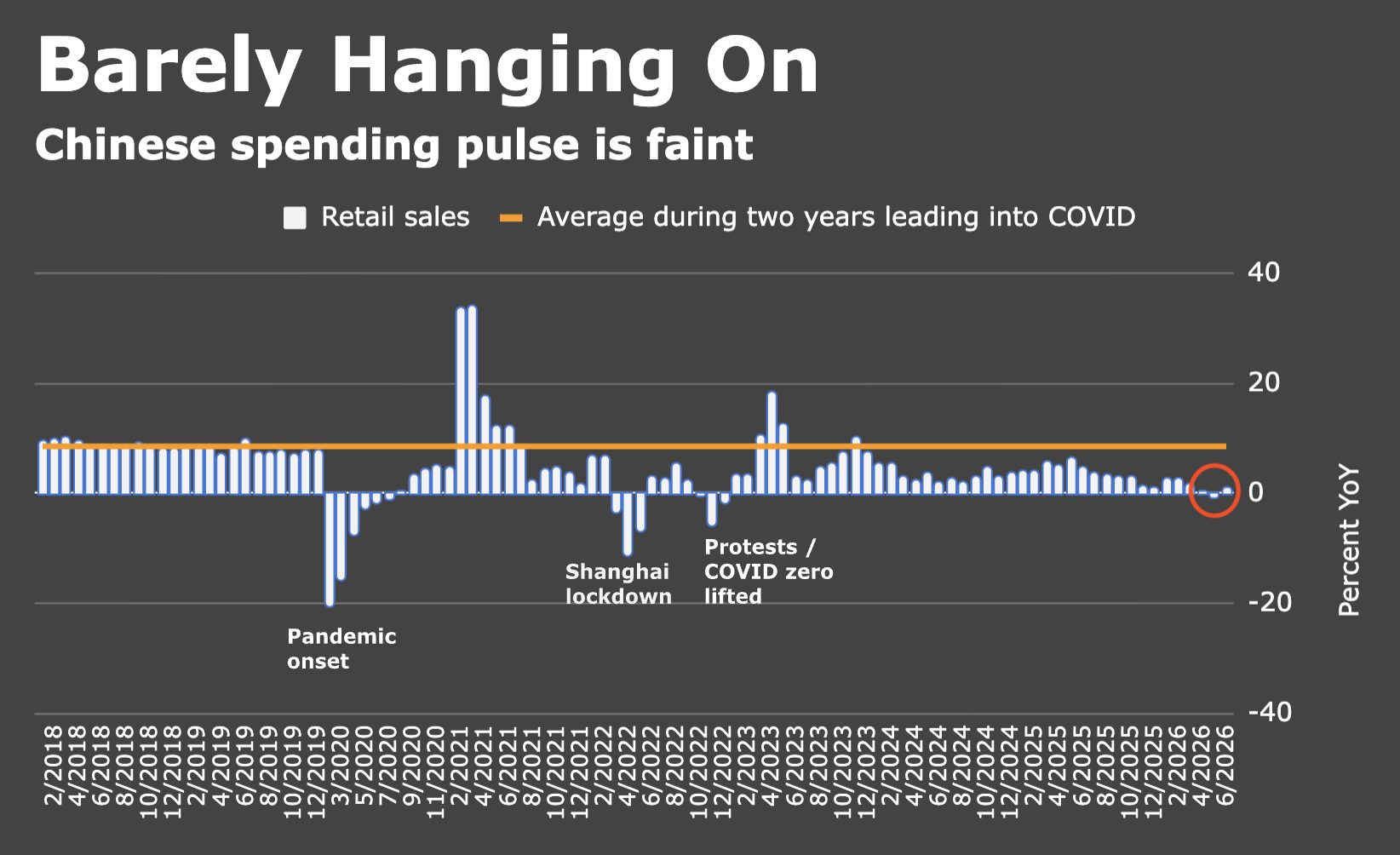
Second, the Chinese credit impulse isn’t likely to inflect dramatically for the better anytime soon. Fixed investment’s on track for a second straight annual decline and domestic demand’s moribund.
By now, it’s pretty obvious officials in Beijing are condoning both of those trends, or at least tolerating them. As Edwards’s colleagues Wei Yao and Michelle Lam put it last month, “In a way, it’s not a bad cure to allow investment to contract in a relatively controlled manner so that consumption remains weak but does not deteriorate as much, and the supply–demand imbalance can correct gradually.” “If the world wants China to rebalance, a large contraction in investment is something to get used to,” they added.
That’s me tying the two charts together to help make the first part of Albert’s case. As he put it, “The ebbs and flows of the ISM manufacturing index still correlate extraordinarily well with analysts’ EPS optimism [and] the credit impulse in a faraway economy still seems to be a remarkably reliable leading indicator for US manufacturing activity.” In the event those relationships hold and EPS optimism rolls over, “the US equity market could face a severe test,” he went on.
In such a scenario, an equities downtrade could be mitigated by easier monetary policy or expectations thereof. That runs counter to the current inflationary zeitgeist, but Edwards made the disinflation case on Thursday.
“Even though non-labor (e.g., commodity) costs have been rising briskly this year, this has been wholly offset by unusually low unit-labor costs [possibly] due to AI,” Edwards said, editorializing around the figure on the left, below.

The figure on the right illustrates the extent to which, to quote Edwards, “subdued total corporate cost inflation is reflected in key measures of inflation such as corporate unit output prices and CPI ex-food, energy and shelter.”
(As a quick aside for the uninitiated, Albert’s a long-time deflationist. But post-pandemic he became a bond bear. In that context, his Thursday disinflation argument constitutes a “reversal of the reversal,” so to speak.)
Taken together, the above constitutes a case for subdued underlying inflation and thereby possible rate cuts looking out six or so months. Of course, slower corporate profit growth wouldn’t be the best news for equity prices, nor would the sort of broader economic slowdown required to convert staunch Fed hawks to doves.
But remember: Bad news can be good news (for equities) if it leads to rate cuts. “I’m a secular bear of bonds and inflation but I say what I see, and the here and now looks just fine to me,” Edwards said, closing his latest dispatch on a bullish note.
If you’re inclined to remark that bullish sign-offs are out of character for Albert, he won’t argue. As he put it Thursday, “Hell must have frozen over.”