Oh, the humanity.
30-year US Treasury yields briefly breached 5% on Wednesday before pulling back. The extension of the prior day’s harrowing rout (itself an encore following a two-month selloff that gathered momentum after Fitch downgraded the US over the summer), spilled over into global bonds including, naturally, bunds.
10-year German yields exceeded 3% for the first time in a dozen years.

Bund yields flirted with, or, depending on the sector, persisted in, NIRP-ian Neverland for years. The 2022/2023 repricing took the 10-year from nothing to 3% in the short span of 18 months.
Spillovers run both ways. What happens in Treasurys can influence bunds, gilts and, to the extent the Bank of Japan will allow it, JGBs. And vice versa. Treasurys are pretty clearly in the driver’s seat for this latest leg higher for DM bond yields.
This is pretty vexing for the BoJ. The bank adopted a more “flexible” approach to yield-curve control in July, but 1% is still a hard cap. 10-year overnight indexed swaps hit 1% on Wednesday.

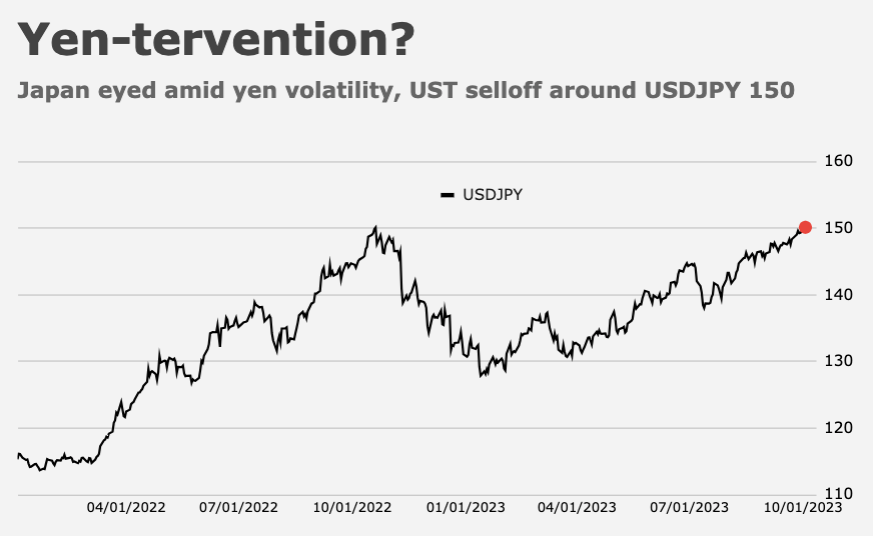
The tension with the yen is palpable: With JGB yields at or near levels where the BoJ will step in to cap rate rise, the bearish repricing in Treasurys by definition means rate differentials move in favor of the dollar. That’s an almost structural argument for a weaker yen. There was speculation around intervention on Tuesday, when USDJPY hit 150 in the wake of US job openings data, before quickly dropping.
Bottom line: The inexorable rise in long-end US yields is on the brink of becoming destabilizing for global markets. 10-year Treasurys (and bunds and so on) are risk-free benchmarks. Yes, there’s something amusingly ironic about a “risk-free” asset which just handed investors a 50% loss over three years (that’s the implication from 30-year Treasurys at 5%) but ultimately, these are the yields off which other assets (all of them ostensibly more risky) are priced. The ZIRP and NIRP era was defined by a forced migration out the risk curve and down the quality ladder as risk-free rates were driven ever lower by central banks. Now, those rates are rising ever higher.
Whether the Treasury selloff persists in the near-term will be a function of this week’s jobs data and, obviously, inflation readings covering last month. Over the medium-term, you do have to worry about dysfunction in D.C. and the implications for America’s credit rating and the term premium.